



Difference between revisions of "Ammonia (anhydrous)"
From Cargo Handbook - the world's largest cargo transport guidelines website
| Line 2: | Line 2: | ||
| image = Ammonia_(anhydrous).jpg | | image = Ammonia_(anhydrous).jpg | ||
| origin = - | | origin = - | ||
| − | | stowage factor = <ul><li>0.86 kg/m<sup>3</sup> (1.013 bar at boiling point)</li><li>0.73 kg/m<sup>3</sup> (1.013 bar at 15°C)</li><li>681.9 kg/m<sup>3,</sup> at −33.3°C (liquid)</li>817 kg/m3 at −80°C (transparent solid) | + | | stowage factor = <ul><li>0.86 kg/m<sup>3</sup> (1.013 bar at boiling point)</li><li>0.73 kg/m<sup>3</sup> (1.013 bar at 15°C)</li><li>681.9 kg/m<sup>3,</sup> at −33.3°C (liquid)</li>817 kg/m3 at −80°C (transparent solid)</li> |
| humidity and moisture = - | | humidity and moisture = - | ||
| ventilation = - | | ventilation = - | ||
| risk factors = See text | | risk factors = See text | ||
}} | }} | ||
Revision as of 12:46, 3 October 2012
| Infobox on Ammonia (anhydrous) | |
|---|---|
| Example of Ammonia (anhydrous) | 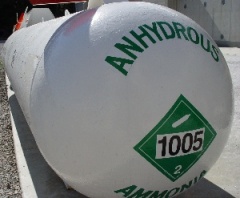 |
| Facts | |
| Origin | - |
| Stowage factor (in m3/t) |
|
| Humidity / moisture | - |
| Ventilation | - |
| Risk factors | See text |