



Difference between revisions of "Abaca"
From Cargo Handbook - the world's largest cargo transport guidelines website
| Line 1: | Line 1: | ||
| + | {{Infobox_Food | ||
| + | | image = Abaca,_Google,_abaca-baled.jpg | ||
| + | | origin = <ul><li>Philippines, Ecuador and Costa Rica</li><li>Asia: Philippines (primary country of cultivation), Indonesia</li><li>America: Central America</li><li>Australia</li></ul> | ||
| + | | stowage factor = <ul><li> 2,5-3,0 m<sup>3</sup>/t</li><li>90-110ft<sup>3</sup>/t</li> | ||
| + | | humidity and moisture = Relative humidity 55% <br>Water content 5 - 10% <br>Maximum equilibrium moisture content 55% | ||
| + | | oil content = - | ||
| + | | ventilation = Air exchange rate: 10-20 changes/hour (airing) | ||
| + | | risk factors = Hazard IMDG Class 4.1 (Flammable Solids) | ||
| + | }} | ||
| + | |||
See [[Manila hemp]] | See [[Manila hemp]] | ||
Revision as of 15:08, 27 July 2012
| Infobox on Abaca | |
|---|---|
| Example of Abaca | 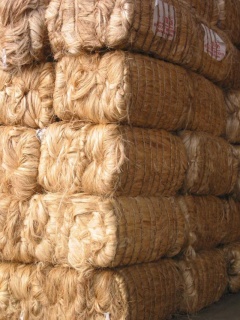 |
| Facts | |
| Origin |
|
| Stowage factor (in m3/t) |
|
| Humidity / moisture | Relative humidity 55% Water content 5 - 10% Maximum equilibrium moisture content 55% |
| Oil content | - |
| Ventilation | Air exchange rate: 10-20 changes/hour (airing) |
| Risk factors | Hazard IMDG Class 4.1 (Flammable Solids) |
Abaca
Contents
See Manila hemp