



Difference between revisions of "Rice (incl. transport guidelines)"
From Cargo Handbook - the world's largest cargo transport guidelines website
| Line 1: | Line 1: | ||
| − | < | + | {{Infobox_Seeds |
| − | < | + | | image = rice.jpg |
| − | + | | origin = This table shows only a selection of the most important countries of origin and should not be thought of as exhaustive.<ul><li>Europe: France, Italy, Hungary</li><li>Africa: Egypt</li><li>Asia: Burma, China, Pakistan, Thailand, India; East and South-East Asia being the main areas of cultivation.</li><li>America: Argentina, Uruguay</li><li>Australia</li></ul> | |
| − | < | + | | stowage factor = <ul><li>1.359 m<sup>3</sup>/t (bulk cargo)</li><li>1.5 - 1.6 m<sup>3</sup>/t (jute fabric bags, 100 kg)</li><li>1.81 - 1.95 m<sup>3</sup>/t (paddy rice, bags or bulk)</li><li>1.34 - 1.39 m<sup>3</sup>/t (cargo rice, bags or bulk)</li><li>1.39 - 1.45 m<sup>3</sup>/t (white rice, bags or bulk)</li><li>1.48 - 1.56 m<sup>3</sup>/t (broken rice, bags or bulk)</li><li>1.84 - 2.12 m<sup>3</sup>/t (rice, unhulled)</li><li>1.44 - 1.56 m<sup>3</sup>/t (rice, hulled)</li><li>1.39 - 1.56 m<sup>3</sup>/t (rice, polished)</li></ul> |
| − | < | + | | angle of repose = - |
| − | </ | + | | humidity and moisture = <ul><li>Relative humidity: 70%</li><li>Water content: 13 - 15%</li><li>Maximum equilibrium moisture content: 70%</li></ul> |
| − | + | | oil content = - | |
| − | + | | ventilation = Loading as bulk cargo: surface ventilation.<br>Loading as general cargo: air exchange rate 15 - 25 changes/hour. Good surface ventilation and airing are necessary. | |
| + | | risk factors = At an excessively high water content in particular, rice has a tendency towards self-heating. Water contents of > 15% and relative humidities of > 75% result in self-heating of the cargo due to hydrolytic/enzymatic fat cleavage.<br>Rice is highly odor-sensitive, prone to contamination and shrinkage. Beware of infestation. | ||
| + | }} | ||
Revision as of 07:58, 11 July 2012
| Infobox on Rice (incl. transport guidelines) | |
|---|---|
| Example of Rice (incl. transport guidelines) | 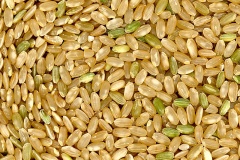 |
| Facts | |
| Origin | This table shows only a selection of the most important countries of origin and should not be thought of as exhaustive.
|
| Stowage factor (in m3/t) |
|
| Angle of repose | - |
| Humidity / moisture |
|
| Oil content | - |
| Ventilation | Loading as bulk cargo: surface ventilation. Loading as general cargo: air exchange rate 15 - 25 changes/hour. Good surface ventilation and airing are necessary. |
| Risk factors | At an excessively high water content in particular, rice has a tendency towards self-heating. Water contents of > 15% and relative humidities of > 75% result in self-heating of the cargo due to hydrolytic/enzymatic fat cleavage. Rice is highly odor-sensitive, prone to contamination and shrinkage. Beware of infestation. |