



Difference between revisions of "Grapes"
m |
|||
| (7 intermediate revisions by 3 users not shown) | |||
| Line 1: | Line 1: | ||
{{Infobox_Fruit | {{Infobox_Fruit | ||
| image = grapes.jpg | | image = grapes.jpg | ||
| − | | carrying temperature = - | + | | carrying temperature = -1,0°C to 0°C |
| − | | highest freezing point = -2, | + | | highest freezing point = -2,7°C |
| acceptable product temp = Max. 2°C above carrying temperature | | acceptable product temp = Max. 2°C above carrying temperature | ||
| Optimum humidity = 90% to 95% | | Optimum humidity = 90% to 95% | ||
| − | | Ventilation setting for containers = | + | | Ventilation setting for containers = 0 m³/hr |
| Storage life = 2-6 months, dependent upon variety | | Storage life = 2-6 months, dependent upon variety | ||
| Climateric / non-climateric = Non-Climacteric | | Climateric / non-climateric = Non-Climacteric | ||
| Line 13: | Line 13: | ||
| Potential benefits = Increased CO<SUB>2</SUB> - slight; reduced O<SUB>2</SUB> - moderate | | Potential benefits = Increased CO<SUB>2</SUB> - slight; reduced O<SUB>2</SUB> - moderate | ||
| Locations = Australia/New Zealand <br> South Africa <br> South America | | Locations = Australia/New Zealand <br> South Africa <br> South America | ||
| − | | Months = | + | | Months = <br>January - June <br> December - May <br> November - June |
}} | }} | ||
== Harvesting and handling == | == Harvesting and handling == | ||
| − | Grapes do not continue to ripen after harvest; they should be harvested at optimal maturity based on soluble solids content. | + | Grapes are fleshy, rounded fruits that grow in clusters made up of many fruits of greenish, yellowish or purple skin. The pulp is juicy and sweet, and it contain several seeds or pips, albeit that for table grapes various seedless varieties are available.<br> |
| + | It is a well-known fruit; it is eaten raw as table grapes, although it is mainly used for making wine as the smaller sized wine grapes.<br> | ||
| + | Grapes are non-climacteric fruit and do not continue to ripen after harvest; they should be harvested at optimal maturity based on soluble solids content (SSC). | ||
<br><br> | <br><br> | ||
| − | High consumer acceptance is attained for | + | High consumer acceptance is attained for fruit with high SSC or SSC/TA ratio. Berry firmness is also an important factor for consumer acceptance as are lack of defects such as decay, cracked berries, stem browning, shriveling, sunburned or dried berries, and insect damage. Grapes (bunches) are mostly packed in 5-10 kg. cartons, often in retail carrying bags or punnets. |
<br><br> | <br><br> | ||
| − | + | ||
| − | |||
== Cooling and storage == | == Cooling and storage == | ||
| − | + | A temperature of approx. 0°C is generally recommended for storage of grapes, at which they have a storage potential of several (2 to 6) months. The storage life is dependent on maturity at harvest, rapid pre-cooling, an effective fumigation programme and low constant storage temperature. Keeping quality is dependent upon variety, e.g. Thompson Seedless will keep for 2-3 months. Ribier keeps for 2-4 months, Alphonse Lavallée, Waltham Cross 3 months and Emperor 4-6 months.The shelf-life of grapes reduces by approx. 40% at +4°C and by approx. 70% at +8°C. Stem respiration rate is approximately 15 times higher than berry respiration. | |
| − | |||
| − | A temperature of approx. 0°C is generally recommended for storage of grapes, at which they have a storage potential of several months. The storage life is dependent on maturity at harvest, pre-cooling, an effective fumigation programme and low constant storage temperature. Keeping quality is dependent upon variety, e.g. Thompson Seedless will keep for 2-3 months. Ribier keeps for 2-4 months, Alphonse Lavallée, Waltham Cross 3 months and Emperor 4-6 months.The shelf-life of grapes reduces by approx. 40% at +4°C and by approx. 70% at +8°C. Stem respiration rate is approximately 15 times higher than berry respiration. | ||
<br><br> | <br><br> | ||
Sweet berries may not freeze until -3°C, but their stems (containing much less sugar) can freeze at | Sweet berries may not freeze until -3°C, but their stems (containing much less sugar) can freeze at | ||
-2°C, leading to wilting and berry drop. To avoid the risk of freezing damage, the recommended carriage temperature is preferably to be around the freezing point rather than well below. | -2°C, leading to wilting and berry drop. To avoid the risk of freezing damage, the recommended carriage temperature is preferably to be around the freezing point rather than well below. | ||
<br><br> | <br><br> | ||
| − | High relative humidity is necessary to minimise moisture loss and maintain stems in good condition | + | High relative humidity is necessary to minimise moisture loss (i.e. shrivelling of the berries) and maintain stems in good, fresh green, condition. Shrivelling and drying of the grapes may be prevented by packing the fruit in perforated polyethylene film inside the export cartons. The normal weight loss due to a reduction of moisture in the grapes is 2 - 3%. |
| − | |||
| − | |||
<br><br> | <br><br> | ||
| − | The onset of ripening in fruit and senescence in all commodities renders them susceptible to infection by pathogens. | + | One of the most common and obvious symptoms of deterioration results from the activity of bacteria and fungi. Attack by most organisms follows physical injury or physiological breakdown of the commodity. In a few cases, pathogens can infect apparently healthy tissues and become the primary cause of deterioration. <br> <br> |
| + | In general, fruits and vegetables exhibit considerable resistance to potential pathogens during most of their postharvest life. The onset of ripening in fruit and senescence in all commodities renders them susceptible to infection by pathogens. | ||
<br><br> | <br><br> | ||
| − | Botrytis cinerea is the most common cause of spoilage. Grapes harvested after rain are much more prone to decay than those harvested after a dry period. The mould | + | Botrytis cinerea is the most common cause of spoilage. Grapes harvested after rain are much more prone to decay than those harvested after a dry period. The mould growth thrives at 24°C, but is still capable of growing and causing rot at temperatures of around 0°C. Botrytis infection can be reduced by removing desiccated, infected grapes of the previous season from vines, leaf-removal canopy management, pre-harvest fungicides, trimming visibly infected, split, cracked, or otherwise damaged grapes before packing, prompt cooling and fumigation with [[sulphur]] dioxide and/or use of continuous release SO<SUB>2</SUB> pads in combination with box liners. |
<br><br> | <br><br> | ||
| − | + | Grapes deteriorate in storage through decay or natural ageing. When approaching the end of their storage life, the berries are losing their brightness and acquire a soft and flaccid texture. | |
<br> | <br> | ||
== Mixed loads == | == Mixed loads == | ||
| Line 48: | Line 46: | ||
<br> | <br> | ||
== Storage disorders == | == Storage disorders == | ||
| − | Alternaria rot, Anthracnose, Aspergillus rot, Berry drop, Black mould, Blue mould, Botrytis cenerea, Cracking, Downy mildew, Grey mould rot, Powdery mildew, Rhizopus rot, Sour rot, Splitting, Sulphur dioxide injury. | + | Alternaria rot, Anthracnose, Aspergillus rot, Berry drop, Black mould, Blue mould, Botrytis cenerea, Cracking, Dehydration with brown stems, Downy mildew, Grey mould rot, Powdery mildew, Rhizopus rot, Sour rot, Splitting, Sulphur dioxide injury. |
<sup>1</sup> SSC = Soluble Solids Content; TA = Titratable Acidity | <sup>1</sup> SSC = Soluble Solids Content; TA = Titratable Acidity | ||
| + | See also: http://www.ukpandi.com/fileadmin/uploads/uk-pi/LP%20Documents/LP_Bulletins/Chinese_Translations/Table%20grapes%20.pdf<br><br> | ||
Latest revision as of 13:58, 10 September 2025
| Infobox on Grapes | |
|---|---|
| Example of Grapes | 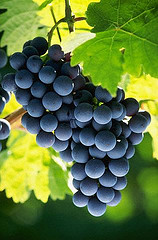 |
| Freshness facts | |
| Optimum carrying temperature | -1,0°C to 0°C |
| Highest freezing point | -2,7°C |
| Acceptable product temp. at loading into containers | Max. 2°C above carrying temperature |
| Optimum humidity | 90% to 95% |
| Ventilation setting for containers | 0 m³/hr |
| Storage life | 2-6 months, dependent upon variety |
| Climacteric / non-climacteric | Non-Climacteric |
| Ethylene production | Very Low |
| Ethylene sensitivity | Moderate |
| Modified / controlled atmosphere | 1%-5% CO2; 2%-5% O2 |
| Potential benefits | Increased CO2 - slight; reduced O2 - moderate |
| Availability | |
| Australia/New Zealand South Africa South America |
January - June December - May November - June |
Grapes
Contents
Harvesting and handling
Grapes are fleshy, rounded fruits that grow in clusters made up of many fruits of greenish, yellowish or purple skin. The pulp is juicy and sweet, and it contain several seeds or pips, albeit that for table grapes various seedless varieties are available.
It is a well-known fruit; it is eaten raw as table grapes, although it is mainly used for making wine as the smaller sized wine grapes.
Grapes are non-climacteric fruit and do not continue to ripen after harvest; they should be harvested at optimal maturity based on soluble solids content (SSC).
High consumer acceptance is attained for fruit with high SSC or SSC/TA ratio. Berry firmness is also an important factor for consumer acceptance as are lack of defects such as decay, cracked berries, stem browning, shriveling, sunburned or dried berries, and insect damage. Grapes (bunches) are mostly packed in 5-10 kg. cartons, often in retail carrying bags or punnets.
Cooling and storage
A temperature of approx. 0°C is generally recommended for storage of grapes, at which they have a storage potential of several (2 to 6) months. The storage life is dependent on maturity at harvest, rapid pre-cooling, an effective fumigation programme and low constant storage temperature. Keeping quality is dependent upon variety, e.g. Thompson Seedless will keep for 2-3 months. Ribier keeps for 2-4 months, Alphonse Lavallée, Waltham Cross 3 months and Emperor 4-6 months.The shelf-life of grapes reduces by approx. 40% at +4°C and by approx. 70% at +8°C. Stem respiration rate is approximately 15 times higher than berry respiration.
Sweet berries may not freeze until -3°C, but their stems (containing much less sugar) can freeze at
-2°C, leading to wilting and berry drop. To avoid the risk of freezing damage, the recommended carriage temperature is preferably to be around the freezing point rather than well below.
High relative humidity is necessary to minimise moisture loss (i.e. shrivelling of the berries) and maintain stems in good, fresh green, condition. Shrivelling and drying of the grapes may be prevented by packing the fruit in perforated polyethylene film inside the export cartons. The normal weight loss due to a reduction of moisture in the grapes is 2 - 3%.
One of the most common and obvious symptoms of deterioration results from the activity of bacteria and fungi. Attack by most organisms follows physical injury or physiological breakdown of the commodity. In a few cases, pathogens can infect apparently healthy tissues and become the primary cause of deterioration.
In general, fruits and vegetables exhibit considerable resistance to potential pathogens during most of their postharvest life. The onset of ripening in fruit and senescence in all commodities renders them susceptible to infection by pathogens.
Botrytis cinerea is the most common cause of spoilage. Grapes harvested after rain are much more prone to decay than those harvested after a dry period. The mould growth thrives at 24°C, but is still capable of growing and causing rot at temperatures of around 0°C. Botrytis infection can be reduced by removing desiccated, infected grapes of the previous season from vines, leaf-removal canopy management, pre-harvest fungicides, trimming visibly infected, split, cracked, or otherwise damaged grapes before packing, prompt cooling and fumigation with sulphur dioxide and/or use of continuous release SO2 pads in combination with box liners.
Grapes deteriorate in storage through decay or natural ageing. When approaching the end of their storage life, the berries are losing their brightness and acquire a soft and flaccid texture.
Mixed loads
If grapes have SO2 packets, they should not be mixed with other produce. The SO2 can damage many kinds of produce. Otherwise grapes can be shipped in mixed loads. However, they should not be shipped with leaks, garlic, or onions to avoid odour transfer.
Cautions
O2 below 1% can cause off-flavours. CO2 greater than 15% may be used as a substitute for SO2 treatment to control grey mould but after two weeks, it can cause browning of berries and stems. SO2 is incompatible with CA so they should not be used together.
Storage disorders
Alternaria rot, Anthracnose, Aspergillus rot, Berry drop, Black mould, Blue mould, Botrytis cenerea, Cracking, Dehydration with brown stems, Downy mildew, Grey mould rot, Powdery mildew, Rhizopus rot, Sour rot, Splitting, Sulphur dioxide injury.
1 SSC = Soluble Solids Content; TA = Titratable Acidity